
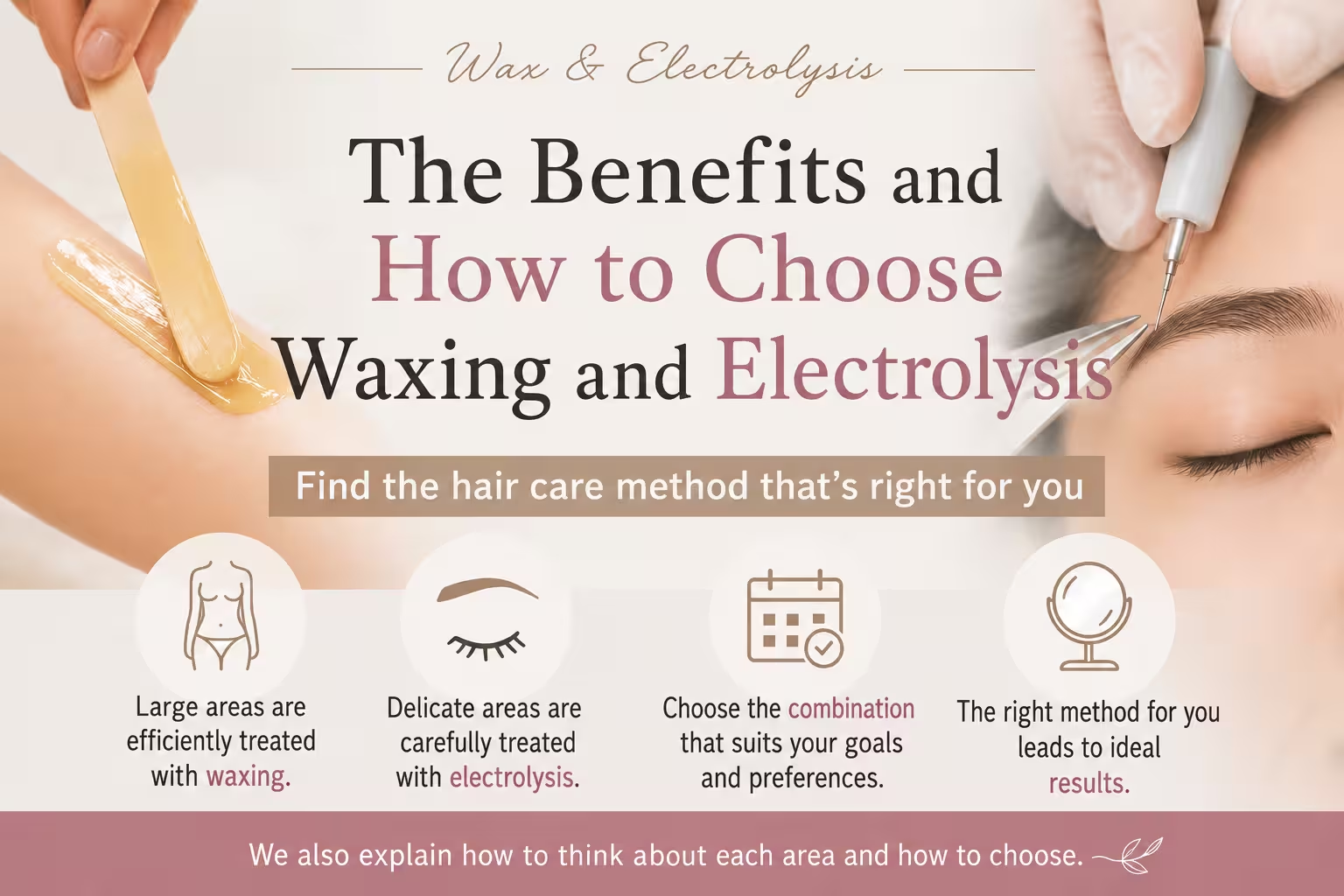
Choosing the right hair removal method is not simply a matter of deciding which treatment is “best.”
Different methods are suited to different areas, hair types, treatment goals, and lifestyles. In many cases, waxing and electrolysis can serve different purposes and may be used as complementary approaches rather than competing treatments.
At Pinsia, a professional electrolysis salon in Osaka, we specialize in electrolysis and tailor our approach to each client’s hair characteristics, treatment area, and desired result.
This guide explains the differences between waxing and electrolysis, the advantages and limitations of each method, and how they may be combined as part of a practical long-term hair removal plan.
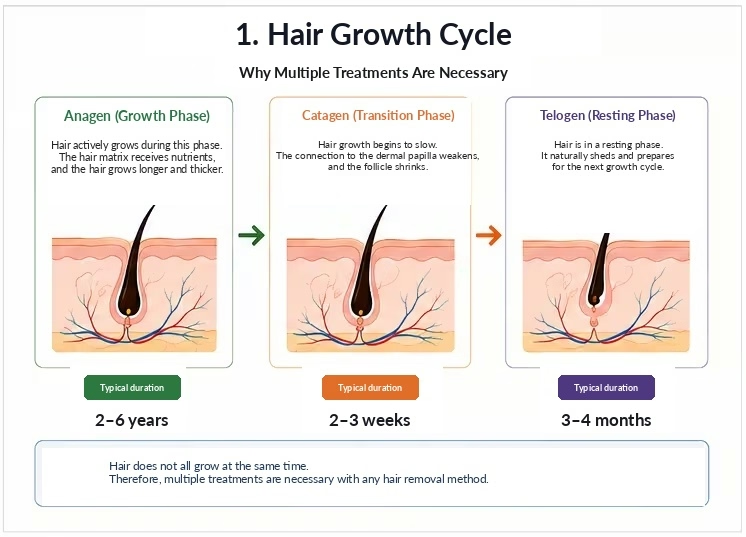
Before comparing hair removal methods, it is important to understand one basic fact: not all hairs are growing at the same time.
Each hair follicle follows its own growth cycle. Hair generally moves through three main phases:
During the anagen phase, the hair is actively growing and remains connected to structures within the follicle that support its growth.
During catagen, active hair growth slows and the follicle begins transitioning toward its resting stage.
During telogen, the hair is no longer actively growing and will eventually shed as the follicle prepares for a new growth cycle.
Because individual hairs are at different stages of this cycle, one treatment cannot address every hair at the same time. This is one of the main reasons why hair removal often requires repeated treatments over time.
Understanding this process also helps set realistic expectations. The goal is not necessarily to remove every visible hair in a single appointment, but to manage the hair progressively as different follicles become treatable.
Waxing is a hair removal method that removes multiple hairs at once from the skin.
A professional applies wax to the treatment area and removes it in a controlled manner, taking the attached hairs with it. Because many hairs can be removed simultaneously, waxing is particularly efficient for larger areas.
Common waxing areas include:
Legs
Arms
Back
Chest
Shoulders
Underarms
Bikini area
Waxing can remove a relatively large amount of hair in a short period of time. This makes it practical for areas where treating individual hairs would be time-consuming.
Because visible hair is removed during the treatment, the skin can look and feel smoother immediately afterward.
This can make waxing particularly convenient before holidays, special occasions, or when you want a clean appearance quickly.
For people who prefer to maintain larger areas on a regular basis, waxing can be a practical maintenance option.
Waxing removes hair from the treated area, but it does not provide the same follicle-by-follicle treatment approach as electrolysis.
Hair will therefore grow back as individual follicles progress through their natural growth cycles.
This is not necessarily a disadvantage. Waxing can be an effective option when the primary goal is short-term smoothness and efficient maintenance.
However, if your goal is to permanently eliminate individual unwanted hairs, electrolysis may be a more appropriate option for those hairs.
Electrolysis is a hair removal method in which a fine probe is inserted into an individual hair follicle and electrical energy is used to treat the follicle.
Unlike waxing, which removes many hairs simultaneously, electrolysis works one follicle at a time.
This makes electrolysis particularly useful when precision is important.
At Pinsia, we specialize in electrolysis for areas where detailed, individual hair removal is desired.
Because hairs are treated individually, electrolysis allows a practitioner to work with a high degree of precision.
This can be especially useful for:
Eyebrow shaping
Facial hair
Chin hairs
Upper-lip hair
Neckline cleanup
Isolated unwanted hairs
Reducing hair density in selected areas
For example, if you have only a few unwanted hairs outside your preferred eyebrow shape, treating those individual hairs can provide a level of precision that is difficult to achieve with a method designed to remove a larger area at once.
One of the important characteristics of electrolysis is that treatment does not depend on the hair’s pigment in the same way as light-based hair removal methods.
This makes electrolysis an important option for people concerned about:
White hair
Gray hair
Blonde hair
Fine facial hair
The suitability of treatment still depends on the individual hair and skin condition, but hair color itself does not prevent electrolysis treatment.
When properly performed, electrolysis is recognized as a method of permanent hair removal because the goal is to permanently destroy the treated hair follicle’s ability to produce hair.
However, this does not mean that every visible hair disappears after one appointment.
New hairs can become visible over time because different follicles are at different stages of their growth cycles. Repeated treatments are therefore normally necessary to address hairs as they become available for treatment.
A common question is:
“If electrolysis can permanently remove hair, why do I need multiple appointments?”
The answer is the hair growth cycle.
At any given time, only some of the follicles in an area are producing visible hairs. Other follicles may be in a different stage of their cycle and may become visible later.
For this reason, electrolysis is usually a progressive process rather than a one-time treatment.
The number and frequency of appointments vary depending on factors such as:
The treatment area
Hair density
Hair thickness
Previous hair removal methods
Individual hair growth patterns
The amount of hair you want to remove
At Pinsia, we assess the condition of the hair and treatment area and recommend a practical treatment approach based on the individual client.
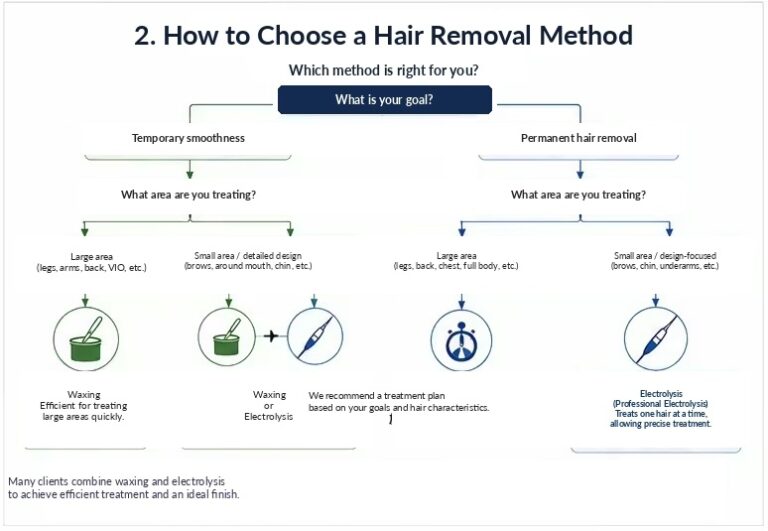
It is easy to think that you must choose between waxing and electrolysis.
In reality, they have different strengths.
Waxing is particularly efficient for larger areas.
Electrolysis is particularly suited to precise, individual hair removal.
For some clients, using the strengths of both methods may make more sense than relying exclusively on one technique.
For example:
Use waxing to maintain a larger area.
Use electrolysis for individual unwanted hairs.
Use electrolysis to refine the shape of the eyebrows.
Use electrolysis for white or isolated hairs that require individual treatment.
The right approach depends on your goals rather than on choosing one method simply because it is more popular.
There is no universal number of days that applies to every client.
The appropriate timing depends on the treatment area, hair growth pattern, skin condition, and whether the hair has grown to a suitable length for electrolysis.
Because waxing removes the visible hair, the practitioner needs to be able to see and access the hair again before electrolysis can be performed effectively.
At Pinsia, we recommend considering the condition of the hair and skin rather than following an arbitrary fixed waiting period.
If you have recently waxed an area and are considering electrolysis, we can assess the area and advise you on an appropriate time to begin treatment.
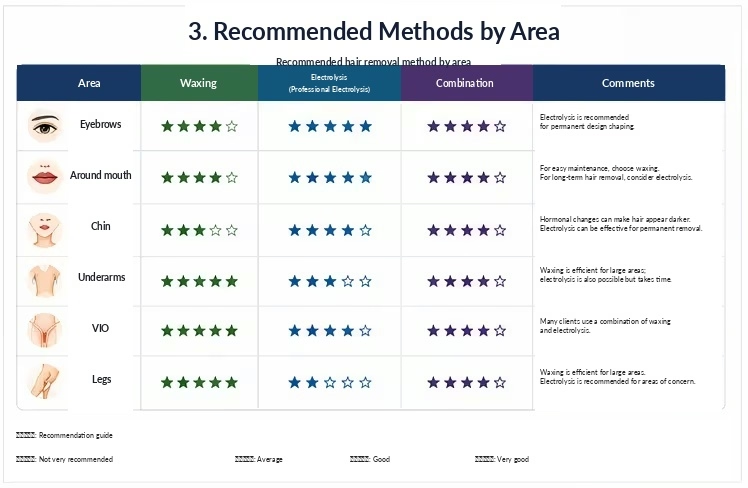
Different areas can benefit from different approaches.
There is no requirement to use the same hair removal method for every part of the body.
Eyebrows require precision because even a small change in shape can affect the overall appearance of the face.
Waxing can efficiently clean up the surrounding area and create a defined overall shape.
Electrolysis, however, allows individual hairs to be selected and removed with greater precision.
For clients who want detailed eyebrow shaping or want to permanently remove specific unwanted hairs, electrolysis can be particularly useful.
Waxing can quickly remove visible hair across the area and provide an immediately smoother appearance.
Electrolysis can be useful when the goal is to target individual hairs precisely, particularly when hair color makes other hair removal options less suitable.
Chin hair can vary considerably from person to person.
Some clients may have only a few coarse hairs, while others may have a larger number of hairs that require ongoing maintenance.
Waxing can provide short-term removal across a broader area, while electrolysis can be used to target individual unwanted hairs for long-term removal.
Waxing can efficiently remove hair across a larger area.
Electrolysis may be preferable when the goal is to refine a neckline or remove individual hairs that fall outside the desired shape.
Waxing can be a convenient way to maintain the entire underarm area efficiently.
For clients who want to progressively reduce specific unwanted hairs over the long term, electrolysis may also be considered.
Waxing is often chosen when a smooth appearance is desired across a larger area, particularly before holidays or special occasions.
Electrolysis may be considered when the goal is to permanently remove selected individual hairs or gradually address specific areas.
The appropriate approach depends on the client’s preferences, hair characteristics, and desired result.
For large areas such as the legs, efficiency becomes particularly important.
Waxing can remove many hairs at once and is therefore practical for maintaining larger areas.
Electrolysis can then be considered for individual hairs or smaller areas where precision is more important.
Hair color is an important consideration when choosing a hair removal method.
White and gray hairs contain little or no pigment, which can make certain pigment-dependent hair removal technologies less suitable.
Electrolysis is different because treatment is directed into the individual follicle rather than relying on hair pigment.
For clients concerned about white, gray, or fine hairs, electrolysis can therefore be an important option.
| Goal | Waxing | Electrolysis |
|---|---|---|
| Quickly remove hair from a large area | Excellent | Less efficient |
| Immediate smooth appearance | Excellent | Good for treated hairs |
| Precise individual hair removal | Limited | Excellent |
| Eyebrow refinement | Good | Excellent |
| Isolated unwanted hairs | Limited | Excellent |
| White or gray hair | Possible depending on method and hair | Suitable option |
| Long-term permanent hair removal | Not the primary purpose | Designed for permanent hair removal |
| Regular large-area maintenance | Excellent | Time-intensive |
The important question is not simply “Which method is better?”
Instead, ask:
“Which method is better for my particular goal?”
Waxing does not change the fundamental thickness of the hair follicle.
Hair can sometimes appear or feel different as it grows back, but waxing itself does not cause the follicle to produce thicker hair.
Electrolysis treats individual follicles, but not every follicle is necessarily visible or accessible at the same time.
Because hair grows in cycles, multiple appointments are normally required to progressively treat the hairs that become visible.
Not necessarily.
The two methods have different purposes and can sometimes be used as complementary approaches.
For example, waxing can be used to maintain a larger area while electrolysis is used to address specific unwanted hairs.
No.
Electrolysis can be used on many areas of the body. However, because it treats hairs individually, the practicality of treatment depends greatly on the size of the area and the amount of hair present.
When recommending a hair removal method, the most useful questions are not simply about price.
A professional assessment should consider:
Which area do you want to treat?
How much hair is present?
How coarse or fine is the hair?
What color is the hair?
What result are you looking for?
How much maintenance are you comfortable with?
How much time can you dedicate to treatment?
What methods have you used previously?
What is your long-term goal?
Two people can have the same treatment area but require completely different approaches.
For example, someone with a few unwanted chin hairs may benefit from a precise electrolysis treatment plan, while someone wanting to maintain an entire leg may prioritize the efficiency of waxing.
This is why individualized assessment is more useful than simply choosing the most popular hair removal method.
When comparing hair removal methods, it is natural to look at the price of a single treatment.
However, cost is only one part of the decision.
It is also worth considering:
How much time each treatment requires
How frequently you need maintenance
How long you expect to continue treatment
How much daily maintenance you want to eliminate
Which areas actually require long-term hair removal
A method that is inexpensive per appointment may not necessarily be the most convenient option for your long-term goals.
Likewise, a more time-intensive treatment may make sense when the objective is precise, permanent hair removal of selected hairs.
The best choice is the one that fits your goals, time, budget, and lifestyle.
Yes. In appropriate circumstances, they can complement one another.
For example:
You may choose waxing for the legs because it is efficient for a large area.
For the eyebrows, electrolysis may be preferred when precise individual hair removal is important.
For a few unwanted chin hairs, electrolysis may also be more practical than repeatedly treating the entire area.
If your main concern is white or gray facial hair, electrolysis can be considered because treatment does not depend on the hair having sufficient pigment.
If you are happy with waxing but have a few areas that you would like to address more permanently, electrolysis may be incorporated into your overall hair removal strategy.
The combination does not have to be the same for everyone.
Online information can help you understand the differences between hair removal methods, but it cannot replace an assessment of your individual hair and skin.
Important factors include:
Hair density
Hair thickness
Hair color
Skin condition
Previous hair removal methods
Treatment area
Desired result
Lifestyle and maintenance preferences
At Pinsia, we believe that the most useful question is not:
“What is the best hair removal method?”
It is:
“What approach is most appropriate for my hair, my treatment area, and my goals?”
Pinsia is an electrolysis-specialist salon in Osaka, Japan.
Our focus is professional electrolysis and individualized treatment planning.
Rather than recommending the same approach to every client, we consider the characteristics of the hair, the treatment area, and the client’s desired outcome.
Waxing and electrolysis each have their own strengths:
Waxing can be highly practical for quickly maintaining larger areas.
Electrolysis offers precise, individual treatment and is particularly valuable when specific hairs need to be addressed, including white or gray hairs.
Our role is not to tell every client that one method is always better. It is to help you understand the available options and determine which approach makes the most sense for your individual situation.
If you are unsure whether electrolysis is appropriate for you, we welcome you to contact Pinsia for an individual consultation.
Yes. They can serve different purposes and may be used together depending on the treatment area and your goals. Waxing can be useful for larger areas, while electrolysis can be used for precise individual hair removal.
There is no single waiting period that applies to everyone. The timing depends on the treatment area, hair growth, hair length, and skin condition. The hair needs to be visible and accessible for electrolysis treatment.
Yes. Electrolysis can be particularly useful for precise eyebrow shaping because individual hairs can be selected and treated.
Waxing is generally more efficient for large areas because many hairs can be removed at once. Electrolysis treats individual follicles, so treating a large, dense area can require considerably more time.
Yes. Electrolysis does not rely on hair pigment in the same way as pigment-dependent hair removal methods, making it an important option for white and gray hairs.
Usually, yes. Hair grows in different cycles, so not every follicle is visible or treatable at the same time. Multiple treatments are generally needed to progressively address the hairs in an area.
No. Waxing is primarily a method of removing visible hair for a period of time. Hair can grow back as the follicles continue through their natural growth cycles.
Electrolysis is designed to permanently remove treated hair by destroying the hair follicle’s ability to produce hair. However, multiple treatments are generally necessary because hairs grow at different times.
Waxing and electrolysis should not necessarily be viewed as two methods competing for the same purpose.
They are different tools.
Waxing is efficient for larger areas and provides an immediately smoother appearance.
Electrolysis provides precise, individual hair removal and can be particularly valuable for unwanted white, gray, or isolated hairs.
The right choice depends on your treatment area, hair characteristics, desired result, maintenance preferences, time, and budget.
At Pinsia, our goal is to help each client choose a practical approach based on their individual needs—not simply recommend one method for everyone.
If you are considering electrolysis in Osaka and are unsure which approach is right for you, contact Pinsia to discuss your goals and treatment area.